ASPECT Studios is one of the most awarded landscape architecture practices in the world, with studios across Australia, London, Shanghai and Dubai. The projects have presence. The thinking is rigorous. The regenerative ambition is real. Their studio leaders are generous with ideas and brilliant in a room.
Their leadership saw the next step clearly: the practice had grown quickly, and it was ready for systems built to match. Eight studios, each with its own way of working, ready for one shared approach. So they brought me in.
Six weeks of listening
I started with a brand audit and a strategy sprint. I sat with leaders across the practice and asked how they used marketing, what they needed to win work, and where effort was being duplicated.
The plan that came out of it was practical. One place where every marketing request lands, so the team prioritises once a week and every studio can see where its work sits. Clear answers on who approves what, so decisions happen quickly and the brand stays consistent. Templates designed around how bids actually get assembled, styling locked, flexible parts clearly marked, so a proposal comes together in hours. One agreed way of describing the practice, written in the language clients use. A proper evidence standard behind the regenerative design story. And a habit of capturing the practice’s best thinking once, then reusing it across bids, the website and articles.
Nine projects. Ninety days. A named owner for each one.
Then ASPECT asked me to stay and build it. Six months as their fractional Head of Brand and Marketing.
What we built
One principle ran through everything: build on what ASPECT already had. Every change had to earn its place and be easy to adopt. The second principle followed from the first: move the everyday sales documents out of heavy design software and into simple PowerPoint, so quick changes stay quick and anyone can make them.
The request system went into Jira, inside the Atlassian tools the practice already ran on. Every request now comes in the same way and stays visible at every step.
The voice guide became an AI writing assistant. The team can query it while writing a social post, a capability statement or a press release. The master prompt behind it is portable, so it works in whichever AI tool the practice chooses. We looked at the whole AI landscape first and kept the assistant independent of any single platform.
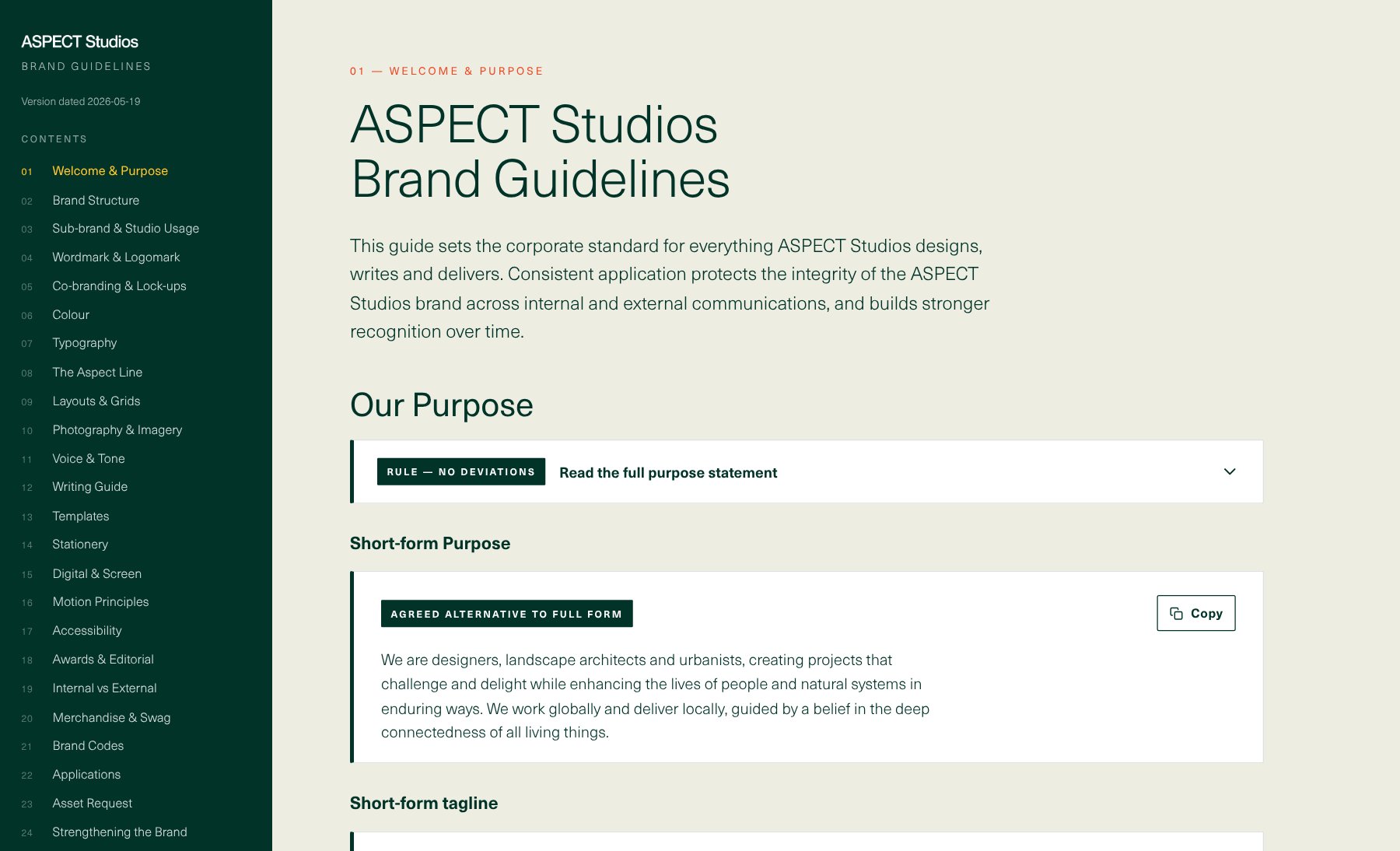
The brand guidelines went from a static PDF to a living digital site, launched as the single source of truth for rules, templates and assets.
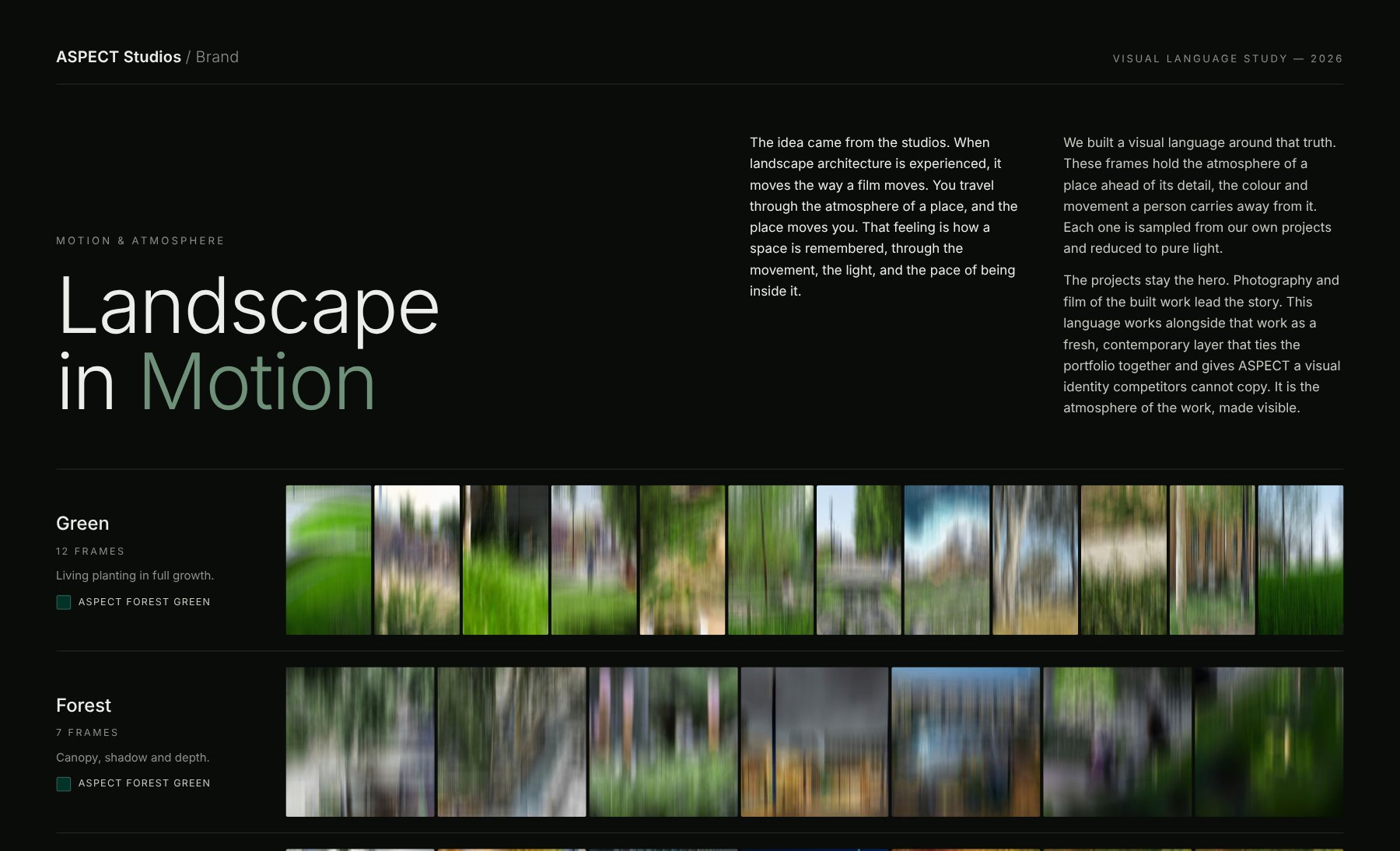
The collateral followed. Bid documents rebuilt in PowerPoint, capability statements crafted in InDesign with a shared creative library behind them, and a refreshed visual identity with a cover system sampled from ASPECT’s own projects. A look that could only belong to ASPECT.
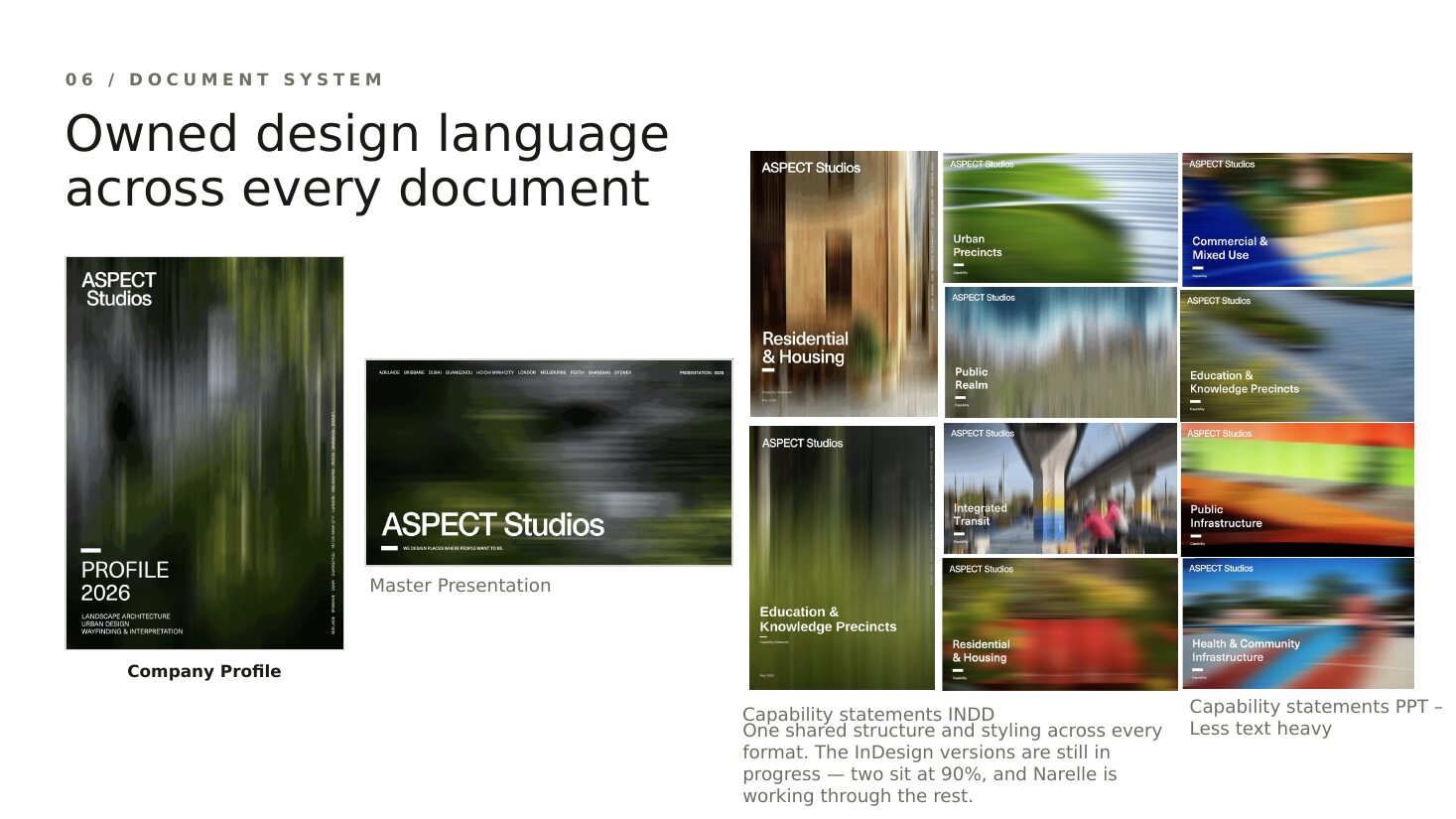
Then the layer around it: a social media system with a full template kit and posting cadence, a media pack and PR templates, a website audit, a digital marketing strategy ready for the incoming digital marketing hire, and hero project stories written and ready to publish.
The last thing we built was the team to run it. A staged structure that grows with demand, Narelle Walch leading as Marketing and Bids Lead, and the next roles mapped. The system came with its own people plan.
The result
ASPECT now runs on one system, built, documented and handed to an internal team. Every studio works from one master deck. Eight capability statements are ready for market. Thousands of PDF project sheets became one searchable project library, tagged by capability for bids. Proposals come together in hours.
My job was to make myself unnecessary.
What I learnt
Systems get built by people who say yes. Gavin Bell in IT made every platform request happen, usually the same day I asked. Emma Britton in HR brought the people side of the function together with real care. Narelle Walch stepped into the Marketing and Bids Lead role and made the system hers, which is how every handover should end.
Design leadership matters just as much. Sacha Coles and Kirsten Bauer, ASPECT’s Global Design Directors, engaged with every hard question about how the brand shows up. They were willing to look at things differently while protecting what makes ASPECT’s work exceptional, and that’s why the visual identity moved forward.
And it starts at the top. It takes confident leadership to decide the fastest way forward is outside experience, and to back it properly. Adam Kiekebosch and Valter Vieira made that call, trusted twenty years of brand systems experience to deliver it, and that’s why six months was enough.
What I’d carry to the next practice
- Stabilise before you scale. Build the operating model first, so a permanent hire walks into something that works.
- If everyone is redesigning the template, the template has failed. Design for bid reality.
- Build on what the client already owns. The fastest-adopted system lives inside the tools people already open every day.
- AI is production capacity. Train it on your approved language, keep a person on the gate, and it removes the blank page while holding the standard.
Is your practice growing fast and ready for systems to match?
You’re in good company. This is the work I do.
Get in touch